
Main fuse keep blowing? A battery can take the spikes
- MCS Certified Installer
- 5.0 rating on Google
- Based in Ilkeston
- You deal with the people who do the work
Why single phase runs out
Most small premises are on a single-phase supply with one main fuse, usually 60, 80 or 100 amps. An 80 amp fuse gives you roughly 18 kW to share between everything that is switched on.
That is plenty most of the time. The trouble is the few minutes when the ovens, the dishwasher, the coffee machine and the heating all pull at once. And the main fuse belongs to the network operator, so if it goes you are shut until they come out and replace it.
How a battery takes the spikes
1. A limit is set
We set a limit a safe margin below your main fuse. The system watches what the building is drawing, second by second.
2. The battery covers the peak
When demand goes over that limit, the battery supplies the difference. The grid only ever sees a steady load.
3. It tops back up
When things calm down, the battery recharges from the grid, or from your solar if you have it, ready for the next rush.
It is called peak shaving. Nothing changes for your staff. The kit just works.
Is this you?
- Your main fuse has blown, or the lights dip when the big kit starts up
- You have been told your supply is at its limit
- You want to add ovens, a compressor, a heat pump or EV chargers and there is no headroom
- A three-phase upgrade has been quoted and the cost or the wait does not work for you
- You would like solar as well, now or later
A real one: the Cowshed Tea Rooms
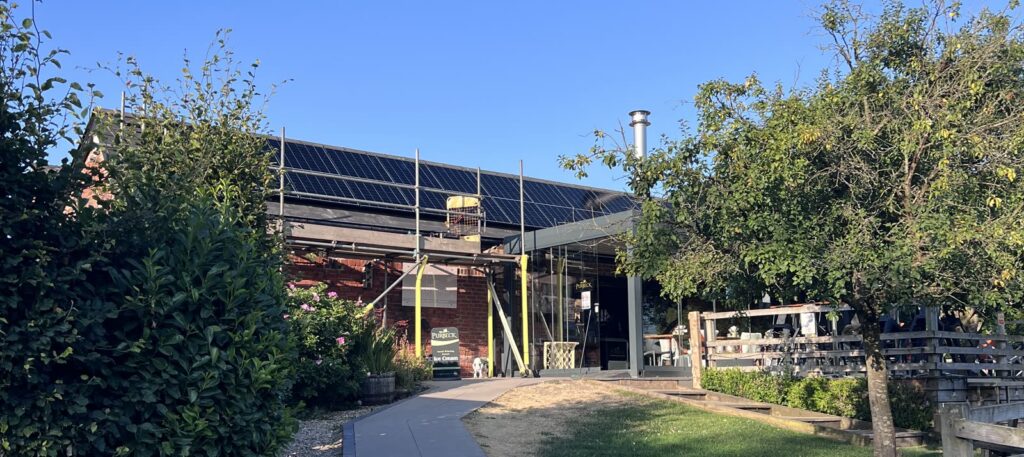
The Cowshed Tea Rooms in Dale Abbey, just outside Ilkeston, runs industrial ovens on a single-phase supply with an 80 amp main fuse. On a busy day it runs close to that limit, and three-phase was not an option for them at the time.
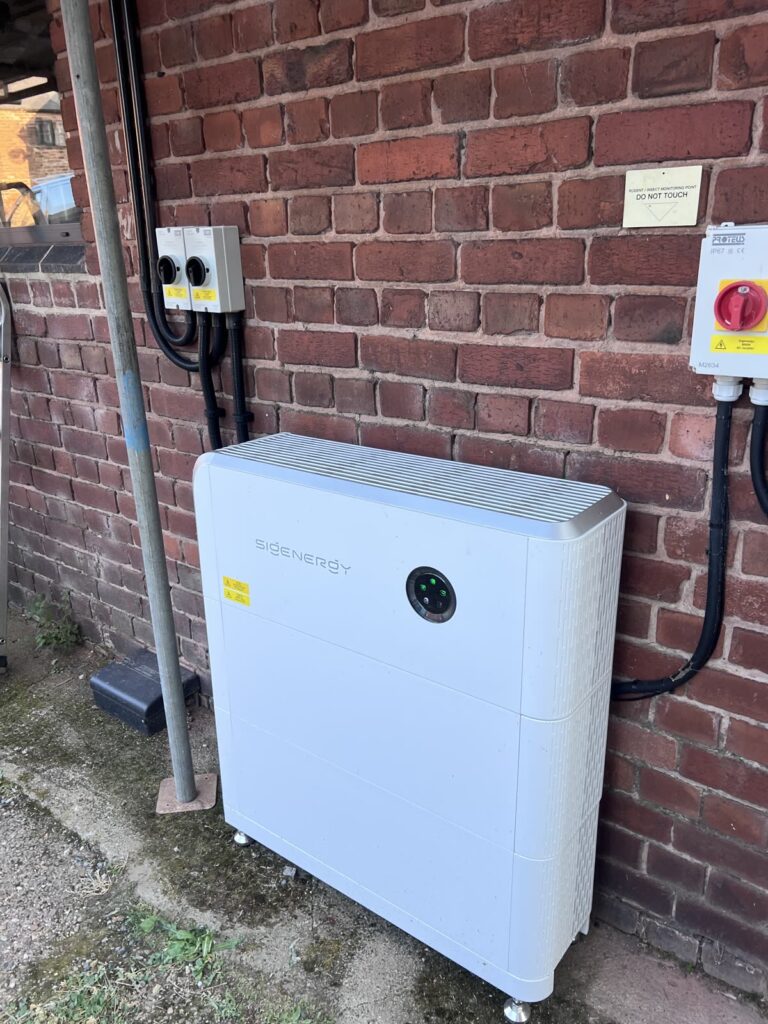
- Spring 2026: a Sigenergy 10 kW inverter, 18 kWh of battery and the Sigenergy Gateway, set up for peak shaving.
- Summer 2026: 26 solar panels (14 kWp) added to the same system.
What it will not do
It does not raise your supply
Your main fuse stays the same size. The battery works within it.
It has limits of its own
A battery can only give so much power for so long. We size it to your real peaks, and we will tell you if it cannot cover them.
It is not automatically backup
Keeping you open in a power cut is a different job. Some systems can do both, so tell us if you need it.
How we work it out
- A look at your supply. We check the main fuse, the incoming supply and your biggest loads.
- Your real usage. Where there is smart meter data, we use it to see how high the peaks go and how long they last.
- A straight answer. What size battery, what it will and will not cover, and whether a three-phase upgrade would suit you better. If it would, we will say so.
- Paperwork and fitting. We apply to the network operator before anything is fitted, then install it and set the limit.
Peak shaving FAQs
Do I need solar panels as well?
No. The Cowshed Tea Rooms started with the battery on its own and added panels a few months later. Solar helps because it recharges the battery for free during the day.
Is it cheaper than upgrading to three-phase?
It depends on your site. The cost and the wait for a three-phase upgrade vary a lot from one address to the next. We will price the battery so you can compare it with the network operator’s quote.
How big a battery will I need?
That comes down to how far over the limit your peaks go and how long they last. A short spike from an oven starting needs far less than an hour of everything running flat out.
Will it keep us open in a power cut?
Not on its own. Peak shaving and backup are different jobs. Some systems can do both, so tell us at the start if backup matters to you.
Does the network operator need to approve it?
Yes. We make the application for you before anything is fitted.
Do you only work near Ilkeston?
We are based in Ilkeston and most of our work is around Derby and Nottingham, but we do travel for the right job. Give us a ring.